

Do you ever feel like you have great intentions to build new habits, but life consistently gets in the way? You set ambitious goals, but maintaining consistency proves challenging. You are not alone in this experience. Many busy professionals and knowledge workers struggle to integrate new behaviors into already packed schedules.
For many, the secret to longevity lies in adopting an identity-based approach to habits that aligns with your professional aspirations.
The good news is that you do not need more willpower. You need a smarter strategy. Habit stacking offers a powerful, science-backed approach to creating lasting change by leveraging the routines you already have. This method allows you to seamlessly weave new behaviors into your daily life, making them feel less like an additional chore and more like a natural extension of your existing actions.

What Is Habit Stacking? A Core Principle of Behavior Change
Habit stacking is a strategy where you pair a new desired habit with an existing, well-established habit. You use an old habit as a trigger or a cue for the new one. Instead of trying to carve out a separate time slot or create a brand-new routine from scratch, you simply attach the new behavior to something you already do consistently.
For a deeper dive into optimizing this technique, you can learn more about stacking habits for maximum impact to accelerate your progress.
Think of it as adding a new block to a tower that is already standing firm. Your existing routines provide the stability and consistency needed for the new habit to take root. This simple yet effective technique streamlines the process of behavior change and reduces the mental friction associated with starting something new.
The core idea behind habit stacking is to make your new habit obvious and easy to remember. By linking it to an existing cue, you bypass the need for conscious decision-making each time. This approach falls under the broader umbrella of behavior design, which focuses on structuring environments and processes to facilitate desired actions.

The Science Behind Habit Stacking: Why It Works
The effectiveness of habit stacking stems from a deep understanding of how our brains form habits. Our brains are remarkably efficient, constantly seeking ways to automate repetitive tasks. This automation process creates neural pathways, forming what we call habits. When a specific cue triggers a routine, your brain expects a reward, reinforcing the loop.
To further streamline this process, you can rewire your brain using priming to make your environmental triggers even more effective.
When you employ habit stacking, you essentially hijack an existing neurological pathway. Your brain already recognizes the cue for your established habit, and by immediately following it with a new behavior, you begin to forge a new connection. Over time, the new habit becomes as automatic as the old one, requiring minimal effort or willpower.
“Make it obvious, attractive, easy, and satisfying.” — The Four Laws of Behavior Change Principle
Research indicates that consistency, not intensity, drives habit formation. Small, consistent actions are more powerful than large, infrequent efforts. Habit stacking excels at promoting this consistency by embedding new behaviors into your daily flow. This method taps into the brain’s natural tendency to follow sequences, making it a highly effective strategy for creating lasting habits.
Identifying Your Habit Stacking Anchors
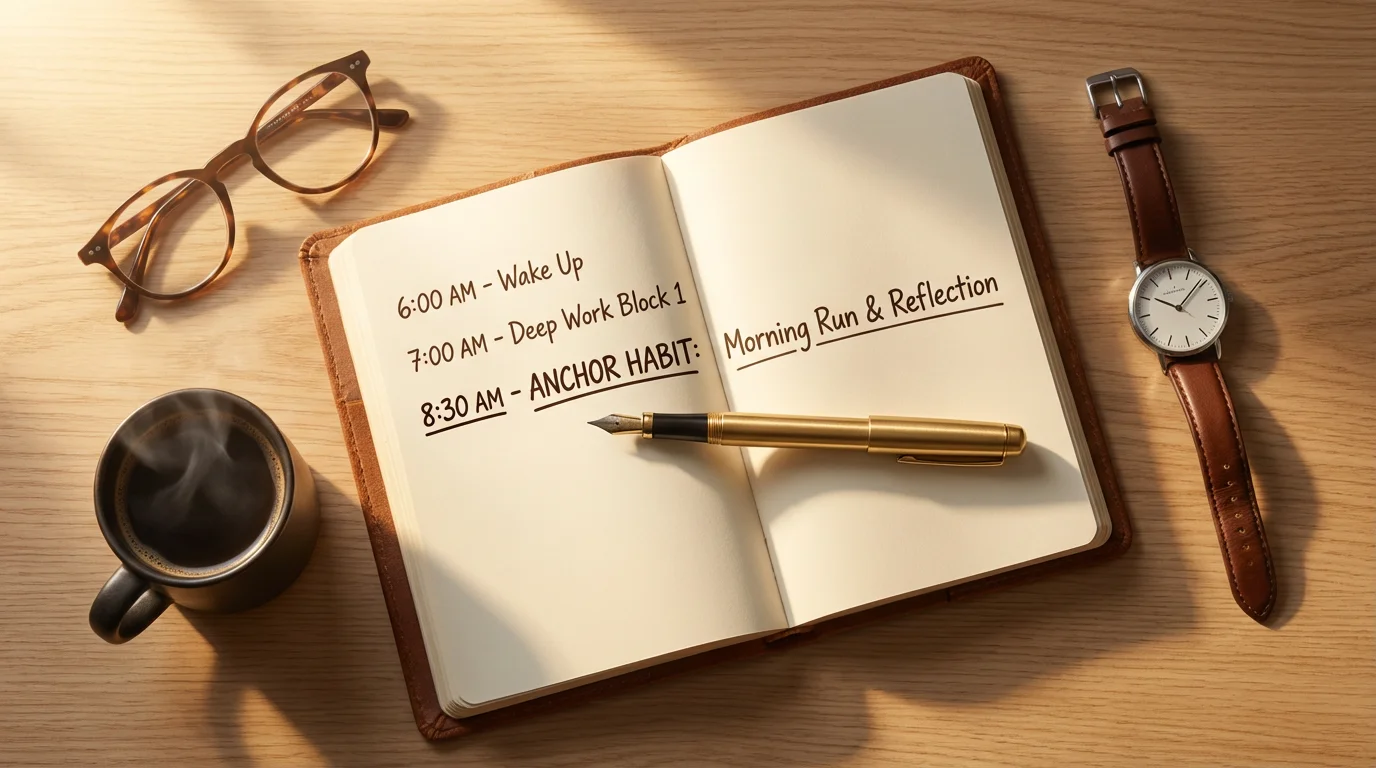
The first crucial step in habit stacking involves identifying strong, consistent existing habits to serve as your anchors. An ideal anchor habit is something you perform daily, almost without thinking, and it has a clear, defined beginning and end. You want to choose habits that are so ingrained they are practically automatic.
Incorporating visual cues alongside these anchors can provide an extra layer of automation for your brain.
To pinpoint your best anchor habits, consider journaling your typical day for a few days. Note down everything you do, from the moment you wake up until you go to bed. Look for recurring actions that happen at specific times or in response to specific triggers. This exercise helps reveal patterns you might overlook.
- Morning Routines: Brushing your teeth, making coffee, showering, getting dressed.
- Workday Rituals: Opening your laptop, checking email, taking a lunch break, logging off.
- Evening Practices: Eating dinner, winding down before bed, reading.
- Transition Moments: Walking through a doorway, getting in or out of your car, returning home from work.
Choose an anchor that naturally precedes the new habit you want to build. For instance, if you want to start meditating, pairing it with your morning coffee ritual makes more sense than pairing it with your evening workout. The closer the new habit is to the existing one in time and context, the stronger the link becomes.

Crafting Your Habit Stack: The “After X, I Will Y” Formula
Once you have identified your anchor habits, you are ready to construct your habit stack using a simple, clear formula: “After [CURRENT HABIT], I will [NEW HABIT].” This precise phrasing helps solidify the connection in your mind and removes ambiguity. Clarity is key for effective behavior change.
Let us walk through an example. Suppose you want to start a new habit of drinking more water. Your existing anchor habit might be brewing your morning coffee. Your habit stack would then be: “After I brew my morning coffee, I will drink one glass of water.” This clear statement makes the new action immediately follow the old one.
Here are some tips for crafting effective habit stacks:
- Be Specific: Instead of “After I wake up, I will exercise,” try “After I turn off my alarm, I will do 10 push-ups.” Specificity reduces decision fatigue.
- Keep It Small: The new habit should be easy and quick to perform initially. A two-minute meditation is more sustainable than a 30-minute session when you are just starting.
- Immediate Follow-Through: The new habit should ideally happen immediately after the anchor habit. Minimize any time gap between the two.
- Environmental Cues: Set up your environment to support the new habit. If you want to take a supplement after breakfast, place the bottle next to your breakfast plate.

Practical Examples of Effective Habit Stacks
Let us explore various scenarios to illustrate how you can apply habit stacking in different areas of your life. These examples show how to integrate new behaviors into existing routines, making your life more productive and organized.
When selecting new behaviors, consider starting with keystone habits that naturally lead to improvements in multiple areas of your life.

For Health and Wellness:
- Hydration: After I finish my morning coffee, I will drink a large glass of water. (Estimate: 1 minute)
- Mindfulness: After I sit down at my desk, I will take three deep breaths. (Estimate: 30 seconds)
- Movement: After I use the restroom, I will do five squats. (Estimate: 15 seconds)
- Nutrition: After I finish eating lunch, I will eat a piece of fruit. (Estimate: 2 minutes)

For Productivity and Learning:
- Learning: After I open my laptop, I will read one page of a non-fiction book. (Estimate: 2 minutes)
- Organization: After I finish a task, I will take 30 seconds to update my to-do list. (Estimate: 30 seconds)
- Deep Work Preparation: After I check my email, I will close all unnecessary tabs. (Estimate: 1 minute)
- Skill Practice: After I finish my workday, I will spend 15 minutes practicing a new skill, like coding or learning a language. (Estimate: 15 minutes)

For Personal Development:
- Journaling: After I brush my teeth at night, I will write one sentence in my journal. (Estimate: 1 minute)
- Gratitude: After I get into bed, I will think of three things I am grateful for. (Estimate: 1 minute)
- Planning: After I eat dinner, I will review my schedule for tomorrow. (Estimate: 5 minutes)
Remember to start small. A new habit that takes 30 seconds is far more likely to stick than one that requires 30 minutes, especially in the initial stages of behavior change. Once the small habit feels automatic, you can gradually increase its duration or complexity.

Troubleshooting Common Habit Stacking Challenges
Even with a solid strategy like habit stacking, you may encounter obstacles. Life is unpredictable, and occasional lapses are a normal part of the process. The key is to recognize these challenges and have strategies to overcome them rather than giving up.
If you find yourself struggling to stay on track, it is helpful to identify why your habits are failing so you can pivot your strategy.
Even with a great system, it is important to know how to combat habit slippage when life inevitably disrupts your routine.

Challenge 1: Forgetting to Perform the New Habit
This is common, especially when you are just starting. Your brain needs time to forge the new connection.
Solution: Place a visual cue in your environment. If your stack is “After I make coffee, I will drink water,” put a glass next to your coffee maker. Set a reminder on your phone for the first few days. Consistency is more important than perfection at this stage.

Challenge 2: The Anchor Habit Is Not Consistent Enough
If your chosen existing habit is sporadic, your new habit will also be sporadic.
Solution: Re-evaluate your anchor. Choose something truly consistent, ideally a daily activity you rarely miss. If you are a busy professional, morning routines or winding-down evening rituals often provide the most stable anchors.

Challenge 3: The New Habit Feels Too Big or Overwhelming
You might have initially made the new habit too ambitious.
Solution: Shrink it down. If 15 minutes of meditation feels like too much, try 2 minutes. If writing a full page in your journal is daunting, aim for one sentence. The goal is to make it so easy you cannot say no. You can always increase it later.

Challenge 4: Lack of Motivation
Motivation naturally ebbs and flows. Do not rely solely on it.
Solution: Focus on the system, not just the motivation. Review your “After X, I will Y” statement. Ensure your environment supports the habit. Celebrate small wins. Acknowledge that showing up, even for a tiny effort, builds momentum. Remember that creating lasting habits is a marathon, not a sprint.
Optimizing Your Habit Stacks for Long-Term Success
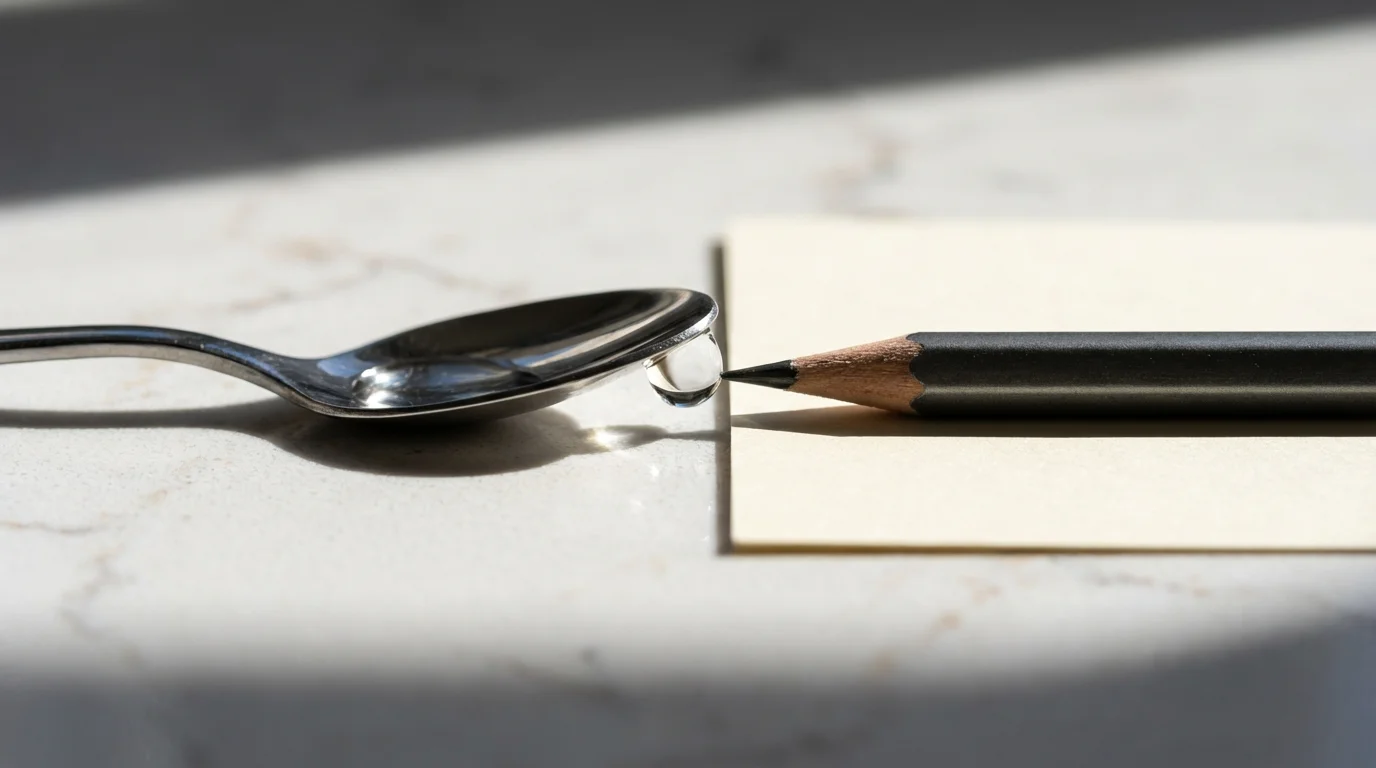
Once your initial habit stacks feel automatic, you can begin to refine and expand them. Optimization is about making your routines even more efficient, enjoyable, and robust against life’s interruptions.
If you are ready to refine your routine further, refer to the ultimate guide to stacking your habits for advanced strategies.

Expand Your Stacks
Once a new habit is firmly established, you can stack another new habit onto it. For example, if “After I make coffee, I will drink a glass of water” is automatic, you can add: “After I drink a glass of water, I will write down three priority tasks for the day.” This creates a chain of positive behaviors.

Reward Yourself (Intelligently)
While the new habit itself should ideally be intrinsically rewarding over time, especially in the early stages, a small, immediate reward can reinforce the behavior. For instance, if your stack is “After I finish my report, I will review my budget,” you might follow it with a quick, guilt-free five-minute browse of an interesting article. The reward should not undermine the habit.

Tweak Your Environment
Your environment is a powerful determinant of your behavior. Make the desired action in your stack as easy as possible to perform and the undesired action harder. If you want to read after dinner, place your book on your pillow. If you want to avoid late-night snacking, put away all unhealthy snacks after dinner.

Be Patient and Adaptable
Behavior change takes time. Some habits will stick quickly, while others require more persistence. Be patient with yourself and do not be afraid to experiment. If a particular stack is not working, analyze why. Is the anchor strong enough? Is the new habit too big? Adjust your approach until you find what works best for you and your unique context as a busy professional.
Consider the varying demands of remote work, office environments, or hybrid models. Your morning routine might differ significantly. Adapt your anchors accordingly. For instance, a remote worker might use “After I open my communication platform,” while an office worker might use “After I arrive at my desk.” Leverage existing routines that fit your specific context.
Frequently Asked Questions
How long does it take for habit stacks to become automatic?
The timeframe for a habit to become automatic varies widely among individuals and depends on the complexity of the habit. Research suggests it can take anywhere from 18 days to 254 days, with an average around 66 days. Consistency is more important than speed. Focus on showing up every day, even if for a very small action, and trust the process.
What if I forget to do my new habit?
Forgetting is a natural part of forming new habits. Do not treat it as a failure. Instead, simply get back on track at your next opportunity. If you miss your morning stack, try to find another anchor later in the day, or simply plan to resume the next morning. The goal is not perfection, but continuous effort and minimizing the duration of any lapse.
Can I stack multiple new habits onto one existing habit?
While possible, it is often best to start by adding only one new habit to an existing anchor. Once that first new habit becomes automatic, you can then add a second new habit to the first new habit, creating a chain. For example: “After I brush my teeth, I will floss. After I floss, I will take my vitamins.” This gradual approach prevents overwhelm and increases your chances of success.
How do I choose the right existing habit?
Select an existing habit that you perform consistently every day, without fail. It should ideally be a habit that happens at a specific time or in a predictable sequence. Look for “trigger” habits that naturally occur before the time or context where you want to introduce the new behavior. Mornings and evenings often provide strong anchors.
Does habit stacking work for breaking bad habits?
Habit stacking is primarily designed for building new, positive habits. However, you can use similar principles to break bad habits. Instead of directly stacking, you can try to replace a negative habit with a positive one, often triggered by the same cue. For example, “After I feel the urge to check social media, I will open a task management app instead.” You replace the old routine with a new, more beneficial one.

Final Thoughts on Stacking Success
Habit stacking is not a magic bullet, but it provides a reliable, evidence-based framework for integrating new behaviors into your life. By leveraging your existing routines, you reduce friction, enhance consistency, and build momentum toward your goals. Remember to start small, be specific with your “After X, I will Y” statements, and be patient with yourself.
Your ability to create lasting habits significantly impacts your productivity, well-being, and overall success. Embrace experimentation, learn from your experiences, and continuously refine your approach. You possess the power to design a life rich with intentional, positive habits. Start stacking today, and watch your success accumulate.

Compliance and Disclosure
The information provided in this article is for informational purposes only and is not intended as medical, psychological, or legal advice. Always seek the advice of a qualified professional for any questions you may have regarding your specific circumstances.








Leave a Reply