

Building new habits often feels like an uphill battle. You start with great intentions, only to find yourself struggling to maintain consistency a few days or weeks later. This common experience leads many to believe they lack willpower or discipline. The truth is, the problem usually lies not with you, but with your approach to change.
The Focused Method champions a different path: the minimalist approach to habit formation. This strategy emphasizes starting small, making your habits incredibly easy to begin, and focusing on consistent habit building over intensity. It is about overcoming habit inertia with the least amount of effort possible, ensuring your new behaviors stick for the long term. This guide will walk you through designing a system where success becomes inevitable, even for the busiest professionals.

Understanding the Minimalist Habit Mindset
The minimalist habit mindset shifts your focus from achieving grand outcomes immediately to establishing consistent action. Instead of aiming to “workout for an hour,” you aim to “do one squat.” This approach reduces the barrier to entry, making it virtually impossible to fail.
This philosophy relies on the power of 1% improvements to create significant long-term results through minor adjustments.
For busy professionals, this is particularly powerful. Your schedules are demanding, and your energy reserves are often limited. Trying to fit in large, new routines often leads to burnout and abandonment. A minimal approach respects your existing commitments while gently integrating new, beneficial behaviors.
“Clarity about what matters provides clarity about what does not.” — Deep Work Principle
By simplifying your habit goals, you gain clarity. You are not aiming for perfection, but for persistence. This strategy fosters a sense of accomplishment daily, which in turn fuels motivation and reinforces the habit loop.

The Core Principles of Minimal Habit Formation
Embracing minimalism in habit formation relies on a few fundamental principles. These guidelines ensure your new habits feel easy, sustainable, and integral to your daily life, rather than a burdensome chore.
Many of these techniques align with the frictionless method of reducing the mental and physical resistance to starting new routines.
- Start Ridiculously Small: Reduce your desired habit to its absolute smallest, most trivial form. The goal is to make starting so easy that you cannot say no.
- Focus on Consistency Over Intensity: The number of repetitions or the duration matters less than doing the habit every single day. Repetition wires the behavior into your brain, establishing consistent habit building.
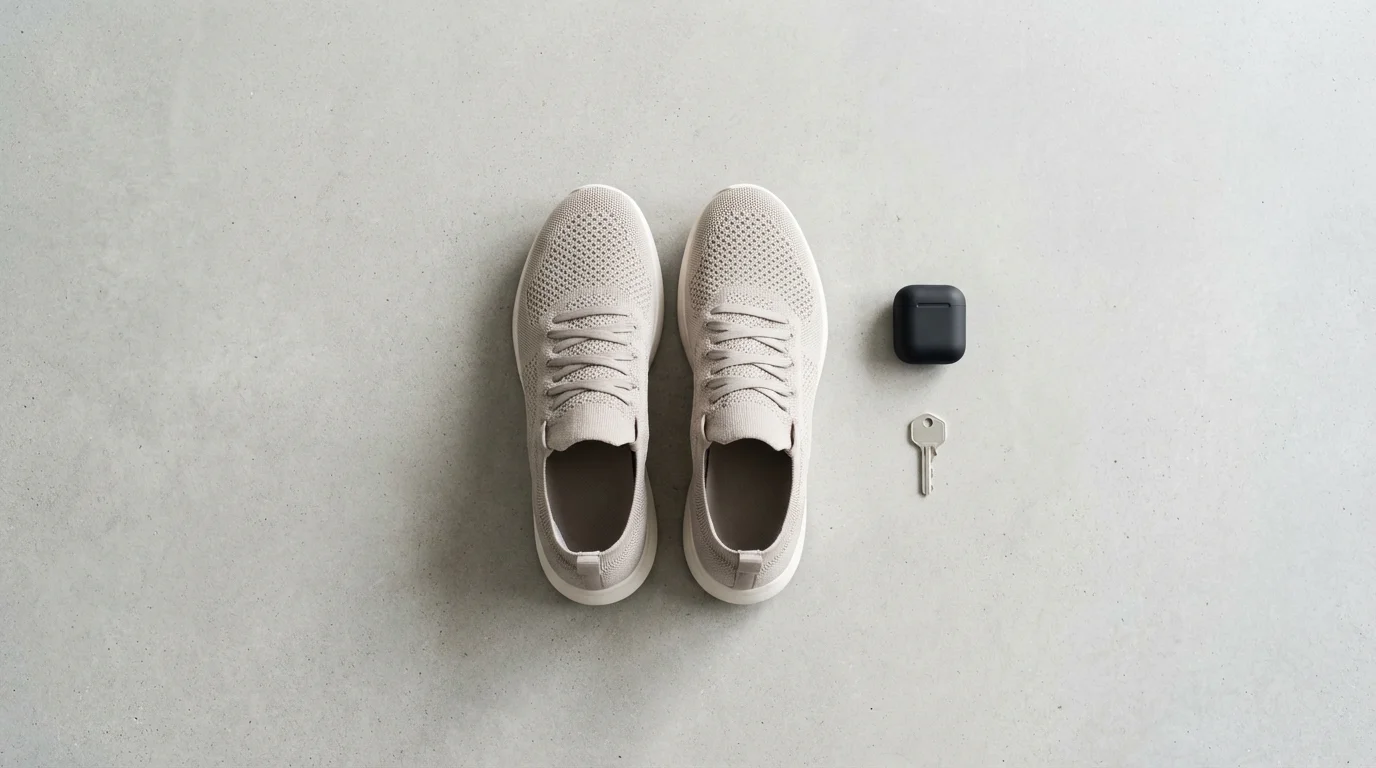
- Make it Obvious and Easy: Design your environment to serve as a clear cue for your habit. Eliminate friction, and remove obstacles.
- Reward Your Effort: Even a tiny, immediate positive feeling or self-acknowledgment helps reinforce the habit loop. The reward can be internal, like a sense of accomplishment, or external, like a quick indulgence.
These principles work in synergy. When you make a habit small, consistent action becomes easier. When you make it obvious, you remove the need for willpower. And when you reward yourself, you create a positive feedback loop.

Identify Your Keystone Micro-Habits
A micro-habit is the smallest possible version of a behavior you want to adopt. It requires minimal time, effort, and motivation. Identifying these keystone micro-habits is the first concrete step in your minimalist journey. They act as a gateway to larger changes, without the intimidating initial commitment.
Consider a habit you want to build. Now, shrink it down. If you want to:
- Read more: Start with “read one sentence” from a book.
- Exercise more: Start with “do one push-up” or “one squat.”
- Meditate: Start with “take one deep breath.”
- Drink more water: Start with “take one sip of water” from a designated bottle.
- Learn a new skill: Start with “open the language app” or “read one paragraph of a tutorial.”
The key here is that the action is so small, it feels insignificant. Yet, this insignificance is its strength. It allows you to build a streak of success, which is crucial for habit formation. According to James Clear, author of Atomic Habits, the goal is to show up, not to perform perfectly.

Crafting Your Tiny Trigger: Environment Design
Your environment plays a powerful role in triggering habits. In the minimalist approach, you actively design your surroundings to make your desired micro-habit impossible to ignore and easy to perform. This process involves creating cues that naturally prompt the behavior.
Think about where and when your micro-habit will fit into your day. Then, manipulate your environment:
- Make it Visible: Place the tools or cues for your habit where you will see them. If you want to read, leave the book on your pillow. If you want to take a supplement, put the bottle next to your coffee maker.
- Reduce Friction: Eliminate any steps that might prevent you from starting. If you want to do one push-up, ensure you have space and are already wearing comfortable clothes, or choose an alternative like wall push-ups that require no special gear.
- Use Existing Routines: Leverage the power of habit stacking, which we will explore next. Your environment can reinforce these stacks.
Research from Psychology Today consistently highlights the impact of environmental cues on behavior. A well-designed environment minimizes the need for willpower, making your habits automatic.

The Power of Habit Stacking: Building on Small Wins
Once you identify your micro-habit and prepare your environment, the next powerful technique is habit stacking. This involves pairing your new micro-habit with an existing, well-established habit you already perform daily. The existing habit acts as the trigger for your new one.
The formula is simple: “After [CURRENT HABIT], I will [NEW MICRO-HABIT].”
Here are some examples of effective habit stacks for busy professionals:
- Existing Habit: Drinking your morning coffee.
- New Micro-Habit: “After I pour my morning coffee, I will do one squat.”
- New Micro-Habit: “After I finish my morning coffee, I will plan my top three tasks for the day.”
- Existing Habit: Brushing your teeth.
- New Micro-Habit: “After I brush my teeth, I will take one deep breath.”
- New Micro-Habit: “After I brush my teeth, I will write one sentence in my journal.”
- Existing Habit: Getting into bed.
- New Micro-Habit: “After I get into bed, I will read one sentence from my book.”
- New Micro-Habit: “After I get into bed, I will think of one thing I’m grateful for.”
This strategy leverages the automaticity of your existing routines. You do not need to remember to start a new habit; your old habit cues the new one. This reduces mental effort and makes consistent habit building significantly easier.
“Habits are the compound interest of self-improvement.” — James Clear (from Atomic Habits principles)
The beauty of this system is its flexibility. You can adapt it to any part of your day, making your new habit a seamless addition to your existing flow.

Tracking Progress and Adapting: The Feedback Loop
While the minimalist approach emphasizes small steps, tracking your progress remains crucial. Tracking provides a visual representation of your consistency, reinforcing your commitment and offering valuable feedback. This does not require complex systems; simplicity is key.
For those seeking a structured start, committing to a 30-day habit challenge can provide the accountability needed to stay consistent.
Consider these straightforward tracking methods:
- Calendar X: Place an “X” on a physical calendar for every day you complete your micro-habit. Seeing a chain of X’s motivates you to keep the streak alive.
- Simple Journal: Jot down a quick note in a small notebook or a digital document after completing the habit. “Squat done,” “read sentence,” “water sip.”
- Basic Habit App: Many free apps allow you to tap a button to mark a habit complete. Choose one that is simple and does not overwhelm you with features.
The goal of tracking is not to achieve perfection, but to monitor consistency. If you miss a day, do not despair. The minimalist approach encourages experimentation and iteration. Forgive yourself, and simply get back on track the next day. This “never miss twice” rule is powerful for maintaining momentum without succumbing to all-or-nothing thinking.
As you consistently perform your micro-habit, you might notice it becoming easier. This is the moment to consider a slight increase, if appropriate. Perhaps “one squat” becomes “two squats,” or “read one sentence” becomes “read one paragraph.” Remember to make changes gradually, maintaining the “ridiculously small” principle.
Overcoming Inertia and Maintaining Momentum
Even with the most minimalist approach, you will encounter days when motivation dips or unexpected challenges arise. This is normal. The key is to have strategies to overcome habit inertia and maintain your consistent habit building, rather than abandoning your efforts entirely.
It is also vital to learn how to habit-proof your routines to prevent minor setbacks from becoming permanent failures.
Here are actionable tips to navigate real-life challenges:
- Lower the Bar Further: If “one push-up” feels too much, do half a push-up, or simply assume the push-up position. The critical step is to initiate the behavior, even if it is a truncated version.
- The Two-Day Rule: Never miss your habit two days in a row. If you miss today, commit to doing it tomorrow, no matter how small. This prevents single lapses from turning into complete abandonment.
- Anticipate Obstacles: Think about what usually prevents you from doing your habit. If evening fatigue is an issue for reading, move your “read one sentence” habit to the morning. If your work schedule changes, re-evaluate your habit stack for the new routine.
- Reconnect with Your “Why”: Briefly reflect on the long-term benefits of your habit. This quick mental check-in can provide a necessary boost when motivation wanes. Studies at the National Center for Biotechnology Information often highlight the role of intrinsic motivation in sustained behavior change.
- Practice Self-Compassion: Productivity is not about perfection. Acknowledge your effort, forgive setbacks, and refocus. This helps you avoid the negative self-talk that often leads to giving up.
Consistency, even when imperfect, builds resilience. Embrace the small victories and use the insights from your tracking to adapt your approach. Your journey is unique, and flexibility ensures you stay on track, whether working remotely, in an office, or managing a hybrid schedule.
Frequently Asked Questions
How long does it take for a minimalist habit to become automatic?
The timeline varies significantly per person and per habit, but consistency is more important than speed. Studies often cite ranges from 18 days to over 250 days. With the minimalist approach, you focus on daily repetition. By making the habit incredibly easy, you reduce resistance and accelerate the process of making it automatic.
What if I forget to do my micro-habit?
This is common. If you forget, simply aim to remember tomorrow. Apply the “never miss twice” rule. Forgetting once does not ruin your progress; it is an opportunity to improve your environmental cues or habit stacking strategy. Consider setting a small, unobtrusive reminder for a few days if needed, but aim for intrinsic cues over time.
Can I combine multiple micro-habits at once?
While tempting, it is generally more effective to focus on establishing one or two micro-habits at a time, especially when you are starting. Once a micro-habit feels fully integrated and automatic, then you can introduce another. Overloading yourself with too many new behaviors, even small ones, can dilute your focus and reduce your chances of success.
How do I scale up a micro-habit once it is established?
Scale up incrementally. Once “one squat” is automatic, try “two squats” for a week. Then “three squats.” The key is to keep each increase small enough that it still feels easy and does not trigger resistance. Listen to your internal cues and only increase when the current version feels effortless and you are confident you can maintain the new level of effort.
What if my environment changes, disrupting my cues?
Life changes, and so do environments. If you move, travel, or change jobs, your cues might be disrupted. This is an excellent time to re-evaluate and redesign your habit system. Identify new existing habits you can stack with, or new visual cues you can implement in your temporary or new environment. Flexibility in adaptation is a strength of this method.
Is the minimalist approach suitable for complex habits?
Yes, absolutely. The minimalist approach is particularly powerful for complex habits because it breaks them down into their foundational, achievable components. Want to write a book? Start with “write one sentence.” Want to learn to code? Start with “open the coding environment” or “read one line of code.” The small, consistent action builds momentum and skill over time, making larger goals attainable without overwhelming you.

Final Thoughts: Your Path to Consistent Habit Building
The journey from zero to a deeply ingrained habit does not require Herculean effort or unyielding willpower. It requires a smart, minimalist strategy that respects your limitations and leverages the science of behavior. By starting small, designing your environment, stacking your habits, and tracking your consistent efforts, you build an unstoppable momentum.
Ultimately, shifting to an identity-based approach will help you sustain these changes long after the initial excitement fades.
Embrace the power of tiny changes. Celebrate your small victories. Forgive your inevitable slips, and always return to the core principle: just show up. This minimalist approach is not just a method for building habits; it is a sustainable path to lasting self-improvement, one ridiculously small step at a time.
Disclaimer: This article provides information for general informational purposes only and does not constitute medical, psychological, or legal advice. Always seek the advice of a qualified professional for any questions you may have regarding a medical condition or psychological well-being.









Leave a Reply