

You protected a two-hour block for hard work, sat down, and spent the first twenty minutes bouncing between the draft, your inbox and a half-finished chat thread. The calendar did its job. The start didn’t.
A fixed entry ritual closes that gap. It takes about five minutes and runs the same actions in the same order before every deep work session. It closes out the task you’re leaving, sets one concrete target, clears your desk and screen, and ends with a single start cue that tells you the session has begun.
Why the first five minutes decide the session
Cal Newport, who coined the term deep work, recommends a short depth ritual run before every session. It settles where you’ll work, for how long, how you’ll work and what will support you, the same way each time, so you don’t spend willpower deciding how to begin.
Because the order and setting stay constant, the sequence itself becomes the signal to start. Wood and Rünger’s review of habit research describes how stable cues and repeated sequences shift starting a behaviour from deliberate effort toward automatic response, which is why consistency matters more than the particular steps you choose.
The five-minute entry ritual, step by step
Run these steps in order, every time. Write them on an index card and keep it on the desk until you no longer need to look.
Minute 1: Park the task you’re leaving
Before you touch the deep work, close the previous task on paper. Write one line per open loop: its current state and the next physical action. “Budget reply: waiting on finance, chase at 3 pm” is enough.
This is the same move that ends a workday shutdown ritual, compressed to sixty seconds. If more than three loops surface, list them on a separate sheet and leave them there for later.
Minute 2: Write the session contract
Turn Newport’s four questions into three lines on a sticky note or at the top of your document:
- Target: one finished output, not a topic. “Draft sections 2 and 3 of the onboarding spec” beats “work on spec”.
- End time: a clock time such as 11:15, not “about 90 minutes”.
- Rules: what is off-limits, for example no email and no browser except two reference tabs.
A backend software architect debugging a payment service might write: “Target: reproduce the duplicate-charge bug in the refund path and land a failing test. End 10:45. Rules: IDE, logs and the incident ticket only; chat closed.”
Minute 3: Clear the visual field
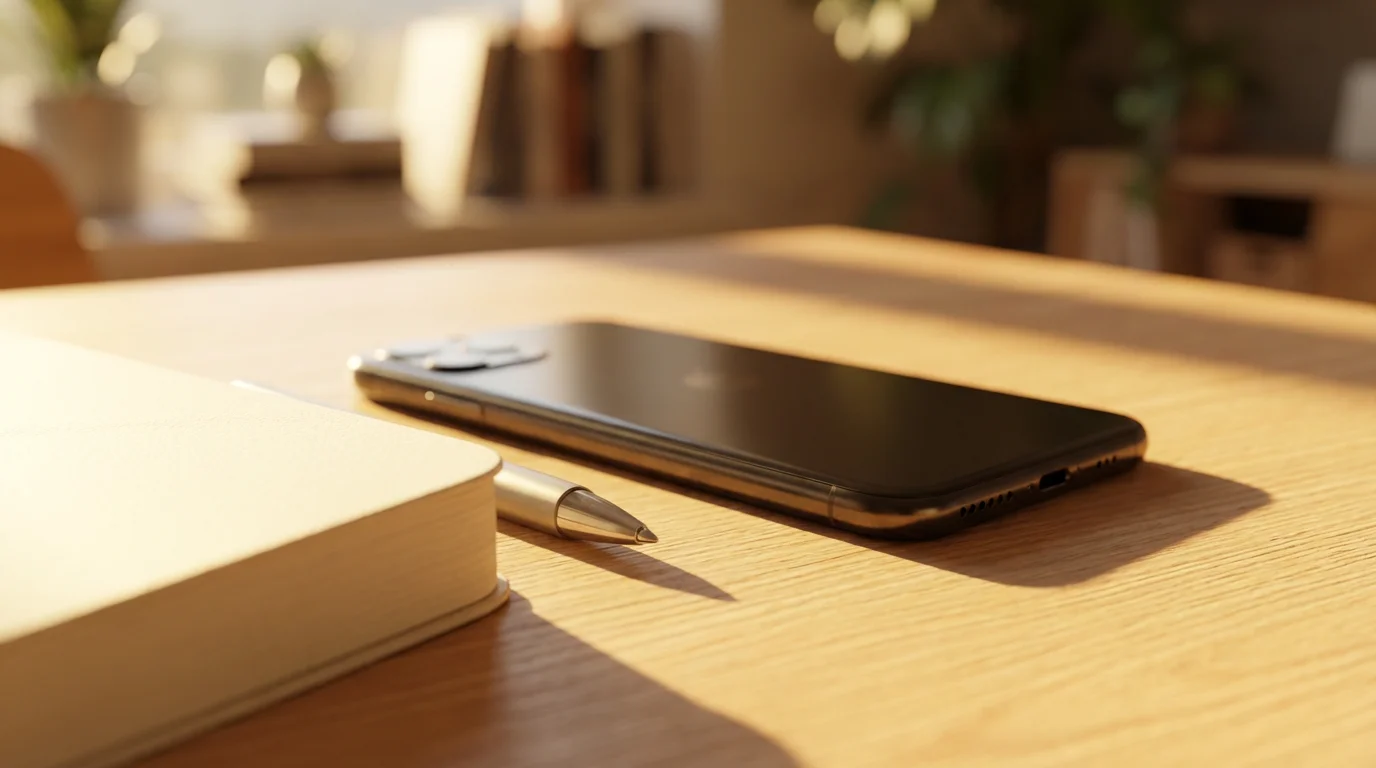
Remove everything from the desk that isn’t part of this session’s target. There is a neural reason to bother: McMains and Kastner found that multiple objects in view compete for representation in the visual cortex, so a stack of unrelated paperwork is not neutral.
Your phone goes face down in a drawer or another room, not silent beside the keyboard. If it still wins most days, the longer-term answer is redesigning the phone itself for focus.
Minute 4: Lock down the screen
Close every app and tab not covered by your rules, then switch on a notification filter. On a Mac, Apple’s Focus settings sit under Apple menu > System Settings > Focus; pick an existing Focus or add a new one, then choose which people and apps may still notify you. Name it Deep Work so it’s one click each session.
On Windows 11, Do not disturb is under Settings > System > Notifications. In Slack or Teams, set a status that states your end time, such as “Focus block, back at 11:15”, so colleagues know exactly when you’re reachable.
Minute 5: Set supports, then fire the start cue
Fetch water, coffee and any reference material now, so nothing gives you a reason to stand up. Then perform one cue reserved for deep work: headphones on, the same playlist or noise track, and a timer set to your end time.
Keep that cue identical across sessions. In a lab study using a simple computer task, Hobson, Bonk and Inzlicht found that performing a ritual beforehand dampened the brain’s response to performance failure. If that effect carries over to real work, a fixed opening may make a hard first paragraph feel less threatening.
If your space is loud, our guide to deep focus in noisy environments compares sound options. Then open the document and write the first sentence or line of code within sixty seconds.

Full ritual vs the 60-second version
You won’t always have your own desk or five spare minutes. Keep the same order and shrink each step rather than dropping the ritual, so the cue survives.
| Step | Full version (about 5 minutes) | Minimum version (about 60 seconds) |
|---|---|---|
| Park | One line per open loop, on paper | One line for the single loudest loop |
| Contract | Target, end time and rules on a sticky note | Target and end time typed at the top of the document |
| Visual field | Clear desk; phone in a drawer or another room | Phone zipped in your bag |
| Screen | Close apps, Deep Work Focus on, chat status set | Full-screen the one document; Focus on |
| Cue | Supports in reach, headphones, playlist, timer | Headphones and timer |
An insurance underwriter who hot-desks on an open floor three days a week can run the full version at home, where the risk files and rating sheets have a permanent spot, and the minimum version at whichever office desk is free. The shared steps keep the cue intact in both places.
Match the ritual to how you schedule depth
In Deep Work, Newport describes four philosophies for fitting focused sessions into a working life. Your trigger should fit the one you actually use.
| Philosophy | How it works | Best-fit roles | Ritual trigger |
|---|---|---|---|
| Monastic | Shallow obligations are minimised; depth is the default | Novelists, researchers, independent developers with few collaborative duties | Entering the workspace; the contract does most of the work |
| Bimodal | Whole days or weeks of depth alternate with open, normal time | Academics between teaching terms, consultants between engagements, founders running build weeks | Start of a deep day, often in a different location; full ritual once each morning |
| Rhythmic | Depth happens at the same time every day | Most office workers, students, writers with day jobs | A fixed clock time plus the identical five-minute sequence |
| Journalistic | You drop into depth whenever a gap opens | Experienced professionals with unpredictable schedules | The 60-second version, run the moment a gap appears |
Most people should start rhythmic. Newport cautions that the journalistic approach is hard for newcomers, because switching into depth on demand is itself a trained skill. If you go rhythmic, put the session on your calendar as a time block so the trigger time is defended.
Where entry rituals go wrong
- The ritual becomes the work. Twenty minutes of tidying and playlist hunting is procrastination with props. Cap it at five minutes.
- The steps change daily. A different order each time never becomes a cue. Revise the ritual deliberately, at most once a week.
- The target is a topic. “Research” gives you nothing to start on. If you can’t name the output, the session’s first target is to define it.
- The park step gets skipped. Without it, the email you abandoned mid-sentence keeps pulling at the opening stretch where flow begins to build.
Pre-session checklist
- Open loops written down, each with a next action
- Target written as one concrete output
- End time written as a clock time
- Rules listed: allowed apps and tabs
- Desk holds only this session’s materials, plus a sheet for stray thoughts
- Phone out of sight and out of reach
- Focus mode on; chat status shows your end time
- Water and references within reach
- Headphones on, timer running
- First sentence written within one minute
Handling interruptions mid-session
Headphones and a status message prevent most interruptions, not all. The general routine for leaving a task cleanly and returning to it is covered in our guide to reclaiming your attention span. Inside this ritual, the one adjustment is where the note goes: write your stopping point directly under the session contract, because that is the first thing you’ll read when you sit back down.

You don’t need the full ritual to get back in. Reread the contract and the note beneath it, confirm your Focus filter is still on, restart the timer for the remaining time, and write one sentence before doing anything else. Run the full sequence once per session and this short restart within it.





1 Comment