Most brainstorming meetings fail the same way: the problem is vague, two people do most of the talking, and the session ends with a photo of a whiteboard nobody opens again. More time or a better app won’t fix that. What fixes it is separating the three jobs a session has to do.
This playbook uses a 3-P structure. You Prepare a narrow “How Might We” prompt before anyone arrives, Produce ideas silently in writing, then Polish them by clustering and dot voting. Run it in 30 minutes with three to eight people and you leave with two or three next steps, each with an owner and a date.
Why separating generating from judging works
Alex Osborn popularised brainstorming in his 1953 book Applied Imagination, with two core rules: defer judgment and go for quantity. The rules were sound, but the format of talking ideas out loud was not. Lab studies repeatedly found that talking groups produce fewer ideas than the same number of people working alone and pooling their lists.
Michael Diehl and Wolfgang Stroebe (1987) traced much of that loss to production blocking: only one person can speak at a time, so others forget, self-edit or give up while waiting. Writing removes the queue. In Paulus and Yang’s experiments, groups that exchanged ideas silently on paper out-produced comparable groups who never saw each other’s ideas, because they could build on them without waiting their turn.
The effect has held up outside the lab too. Field studies in an industrial company found silent, asynchronous idea sharing workable with real teams and real problems, although those studies were exploratory and small. Note what this research measures: mostly idea count. Volume is the raw material; the Polish phase is what turns it into decisions.

Prepare: the ten minutes before the session
Write a How Might We prompt at the right altitude
The “How Might We” format traces back to Min Basadur’s work at Procter & Gamble in the 1970s and was later spread by IDEO and Stanford. The d.school’s guidance is to scope the question narrow enough to focus a session but broad enough to allow many different answers.
- Too broad: “How might we grow revenue?” Everyone answers a different question.
- Too narrow: “How might we add a discount code to the checkout email?” The solution is already baked in.
- Right altitude: “How might we get first-time customers to place a second order within 30 days?”
Invite fewer, more varied people
Three to eight participants is a practical range: enough perspectives, few enough that the Polish discussion stays short. Include at least one person who touches the problem daily, such as a support agent for a retention question. The facilitator runs the clock and the rules and contributes ideas only in writing, if at all.
Send the prompt 24 hours ahead with one line of context and the decision the session will feed. People arrive having already thought, which shortens the warm-up.
Set up materials before the clock starts
In a room: sticky notes, thick markers, one idea per note, written large enough to read from two metres. Remotely: a digital board with one column per participant and the prompt pinned at the top, linked in the invite. Nobody should spend meeting time learning the tool.
Produce: silent ideas first, talk later
Brainwriting rounds
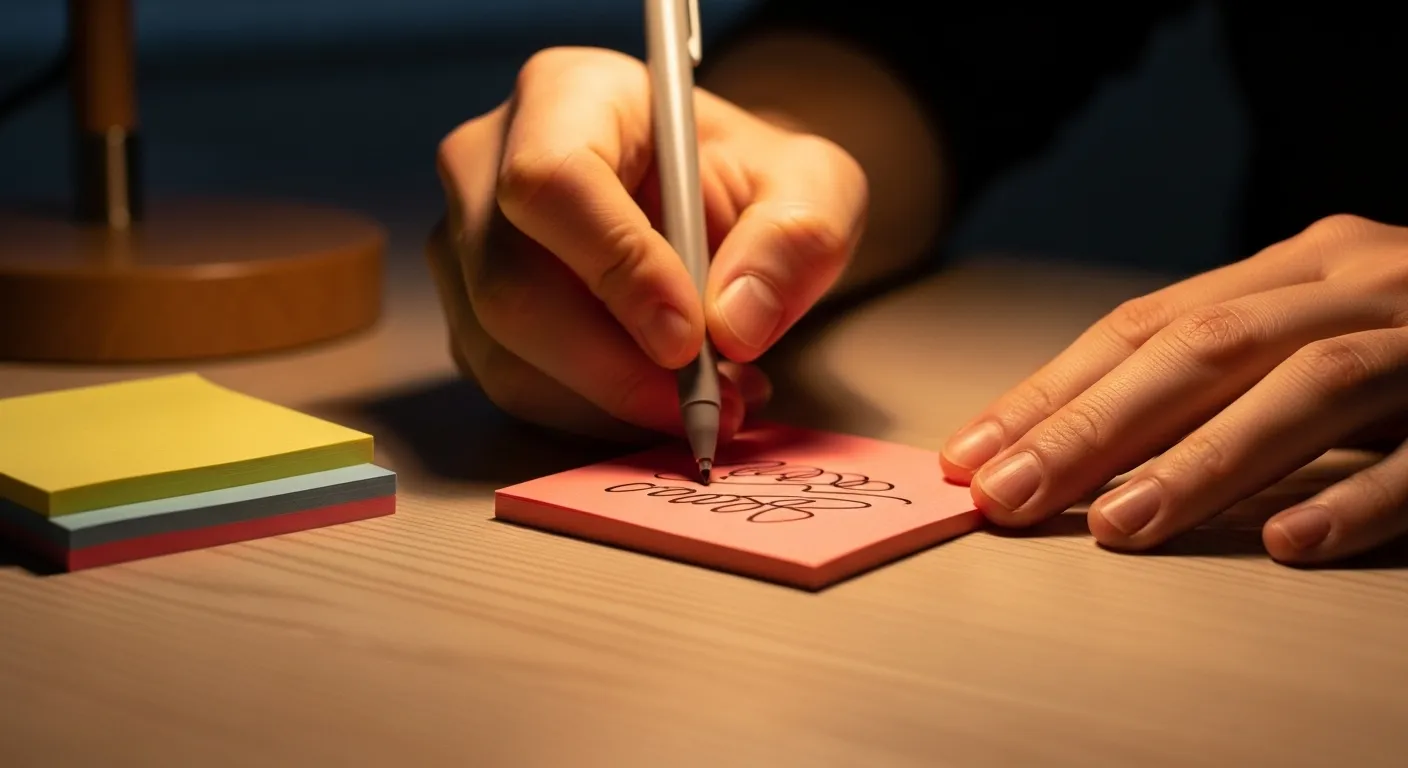
Bernd Rohrbach’s original 6-3-5 method had six people each write three ideas in five minutes, then pass the sheet on. A looser version suits most teams: five minutes of solo writing, then pass your notes to the right and spend three minutes adding ideas sparked by someone else’s. Repeat once or twice.
The arithmetic explains the appeal. Five people writing five notes per round across three rounds can fill a wall with up to 75 ideas in about 15 minutes, with nobody interrupted.
Round Robin when the group needs to hear each other
Go around the circle; each person offers one idea, which the facilitator writes down. Saying “pass” is always allowed. It is slower than brainwriting but suits small, trusting teams where hearing ideas aloud helps, and the strict turn order still stops one person from taking over.
Mind mapping for problems with many parts
Put the problem in the centre, draw four or five main branches for its components, then add keywords on sub-branches. The useful step is the last one: draw lines between items on different branches. Those cross-links are often where the less obvious ideas sit.
If a round stalls, change the angle rather than waiting it out. Ask “How would an airline, a hotel or a video game solve this?” and run one more three-minute round.
Polish: from 60 notes to three owned actions
Affinity map in silence
Affinity diagramming comes from Jiro Kawakita’s KJ method. Nielsen Norman Group’s version has the group move notes into thematic clusters, then name each cluster. Do the first five minutes without talking: everyone moves notes, stacks duplicates, and anyone may move a note someone else placed. Talk only when naming clusters and clarifying unclear notes.

Three-dot voting
In dot voting, each person gets a limited number of votes, commonly three, to place on the ideas or clusters they rate highest. State the criterion first (“most likely to lift second orders this quarter”) and have everyone vote at the same moment so nobody follows the most senior person’s dots. The result is a heat map, not a verdict; the decision owner confirms it. It also spares the group a long debate at the point when energy is lowest, a common source of decision fatigue.
Turn winners into next actions
Each top idea leaves with an owner, a first physical action and a date. “Launch a referral programme” is a wish. “The growth marketer drafts three referral offers and shares them in the team channel by Thursday” is an action. The same rule makes any meeting more productive.
Which method to use
| Method | Group size | Time | Best problem type | Introvert-friendliness |
|---|---|---|---|---|
| Brainwriting | 4-8 | 12-20 min | Needing many ideas fast; mixed seniority | High: no speaking required |
| Round Robin | 3-7 | 10-20 min | Building on each other in small, trusting teams | Medium: turns are public, but passing is allowed |
| Mind mapping | 1-5 | 15-30 min | Complex problems with several parts; solo work | High solo, medium in groups |
| Dot voting | 3-15 | 3-5 min | Narrowing a shortlist (not for generating) | High if everyone votes at once |
Six ways a brainstorm derails
- The prompt hides a solution. If every idea is a variant of one thing, rewrite the prompt around the outcome, not the tactic.
- One voice fills the room. Redirect to paper: “Good one, put it on a note. Everyone take three minutes to add yours.”
- Critique leaks into Produce. Keep a “concerns” note on the side: “Park it there; feasibility comes after the clustering.”
- Votes follow the boss. Vote simultaneously, or ask the most senior person to vote last.
- Nothing worth voting on. Usually the prompt’s altitude is wrong. Reword it and reschedule rather than forcing another round from a tired group.
- The session ends at the photo. Protect the final five minutes for owners and dates, whatever else runs over.
Minute-by-minute run sheet for a 30-minute session
| Minute | Phase | What happens |
|---|---|---|
| Day before | Prepare | Send the How Might We prompt, context line and board link |
| 0-3 | Prepare | Restate the prompt and rules: silence, one idea per note, no critique yet |
| 3-8 | Produce | Brainwriting round 1, aim for five notes each |
| 8-11 | Produce | Pass and build, round 2 |
| 11-14 | Produce | Pass and build, round 3, or the “other industry” prompt |
| 14-19 | Polish | Silent affinity clustering |
| 19-21 | Polish | Name clusters, clarify unclear notes |
| 21-24 | Polish | Three-dot vote against the stated criterion |
| 24-28 | Polish | Owner, first action and date for the top two or three |
| 28-30 | Close | Read actions aloud; say where the board will live |
Keep the end time fixed, in the spirit of timeboxing. If the problem needs more, book a second 30-minute Polish session rather than letting one meeting stretch to 90 minutes.
For distributed teams, run Produce asynchronously over 24 hours on the shared board, then meet live for a 15-minute Polish; the trade-offs are covered in our guide to synchronous vs. asynchronous communication. Working alone, give yourself 15 minutes of mind mapping, take a short walk, then cluster and pick your top three with fresh eyes.